Seaview Aesthetics changes perspective on GHK-Cu
A calm surface can hide a complicated story. Copper-peptide research gets more interesting as the view moves from skin appearance to the experiments underneath.
Copper peptides and skin research
I admire a good surface. I also want to know what holds it together. With GHK-Cu, the copper-peptide complex at the centre of these pages, those interests lead straight to an experiment in human fibroblast cultures: collagen production increased while cell number stayed unchanged. That is a wonderfully specific finding to set beside a broad word like rejuvenation.
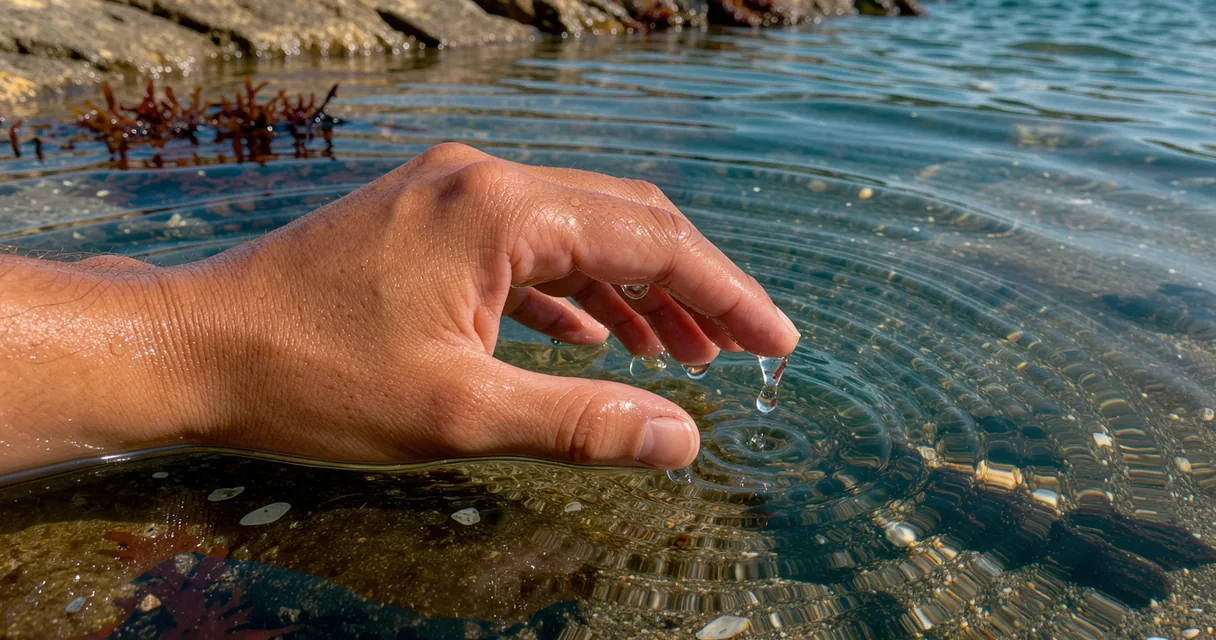
The seaview in this title suggests a similar pleasure in changing the distance of observation. From far away, a stretch of water looks like a single surface. Close up, the boundaries become the interesting part. In the skin research, I am particularly drawn to the boundary between an ingredient doing something to cells and a formulation delivering it through skin.
A review of topical GHK and wrinkles puts poor permeability through the stratum corneum, the outer skin barrier, at the centre of the problem. The constraint makes the explanation feel sturdier. An account of skin biology that has to reckon with skin itself has something solid to argue about.
Copper delivery and cosmetic findings
The collagen result gives a reason to investigate. Delivery gives a different question. In a laboratory study using prepared human skin, the investigators measured copper passing through skin and copper remaining within it. The material, the skin preparation and the thing measured all matter to the meaning of the result.
At first, the biological activity overshadowed delivery in my estimation. The delivery work shifted that balance: the formulation now shares the foreground with the peptide. A result can be impressive within its own setting and still leave a considerable distance to travel before it answers a question about visible skin.
There are cosmetic findings to consider, too. A review of skin-regeneration research reports improvements in skin laxity, clarity, fine lines, wrinkle depth and density in placebo-controlled topical studies. Those results are enough to justify a careful look at the clinical reports. I object to bundling so much into the name GHK-Cu when the actual experiments ask quite different questions.
Copper-peptide research topics
These are the questions that make the subject worth the trouble for me:
- Collagen production: the old cell-culture result and the surprisingly important detail about cell number.
- Skin penetration: copper measured in prepared skin, and why the barrier still dominates the formulation discussion.
- Wrinkle evidence: the distinction between a person showing a biological response and the size of a visible change.
- Gene-expression claims: a large reported effect with a threshold that deserves to stay in the sentence.
The reading list brings the relevant studies and reviews together. I favour the close view: enough detail to leave the interesting result intact, and enough patience to resist making it carry every cosmetic hope at once.